If you've been diagnosed with osteoporosis or osteopenia, you've almost certainly heard that you need to exercise. Your doctor probably told you to do "weight-bearing exercise" or "resistance training" or both. And you probably nodded and then wondered what, exactly, the difference is.
I know I did. After my compression fractures, I was terrified of doing the wrong thing. The last thing I wanted was another fracture because I picked up the wrong dumbbell or did the wrong type of movement. So I dug into the research, talked to physical therapists, and figured out what each type of exercise actually does for bone.
What "Weight-Bearing" Really Means
Weight-bearing exercise is any activity where you're on your feet and working against gravity. Your skeleton is literally bearing your body weight while you move. The impact of your feet hitting the ground sends signals through your bones that stimulate them to maintain or build density.
Walking counts. So do dancing, stair climbing, hiking, and tennis. The key factor is that you're upright and your bones are supporting you. Swimming and cycling, while excellent for cardiovascular health, are not weight-bearing because the water or the bike seat is holding you up.
The research is clear that higher-impact weight-bearing activities tend to produce greater bone benefits. Activities like jogging, jumping rope, and tennis generate stronger signals to your bone cells than a leisurely walk. For patients without current fractures who are working to improve their bone mass, higher-impact exercise can be very effective. If you have active fractures or more advanced bone loss, brisk walking and stair climbing are safer starting points that still provide meaningful benefit. The right level of impact depends on your individual situation, which is why that conversation with your doctor or physical therapist matters.
What "Resistance Training" Really Means
Resistance training involves your muscles pulling against a load, and that pulling force transmits directly to the bones where the muscles attach. When muscles contract forcefully, they tug on bone. That mechanical stress signals your bone cells to lay down new tissue and strengthen the areas under load.
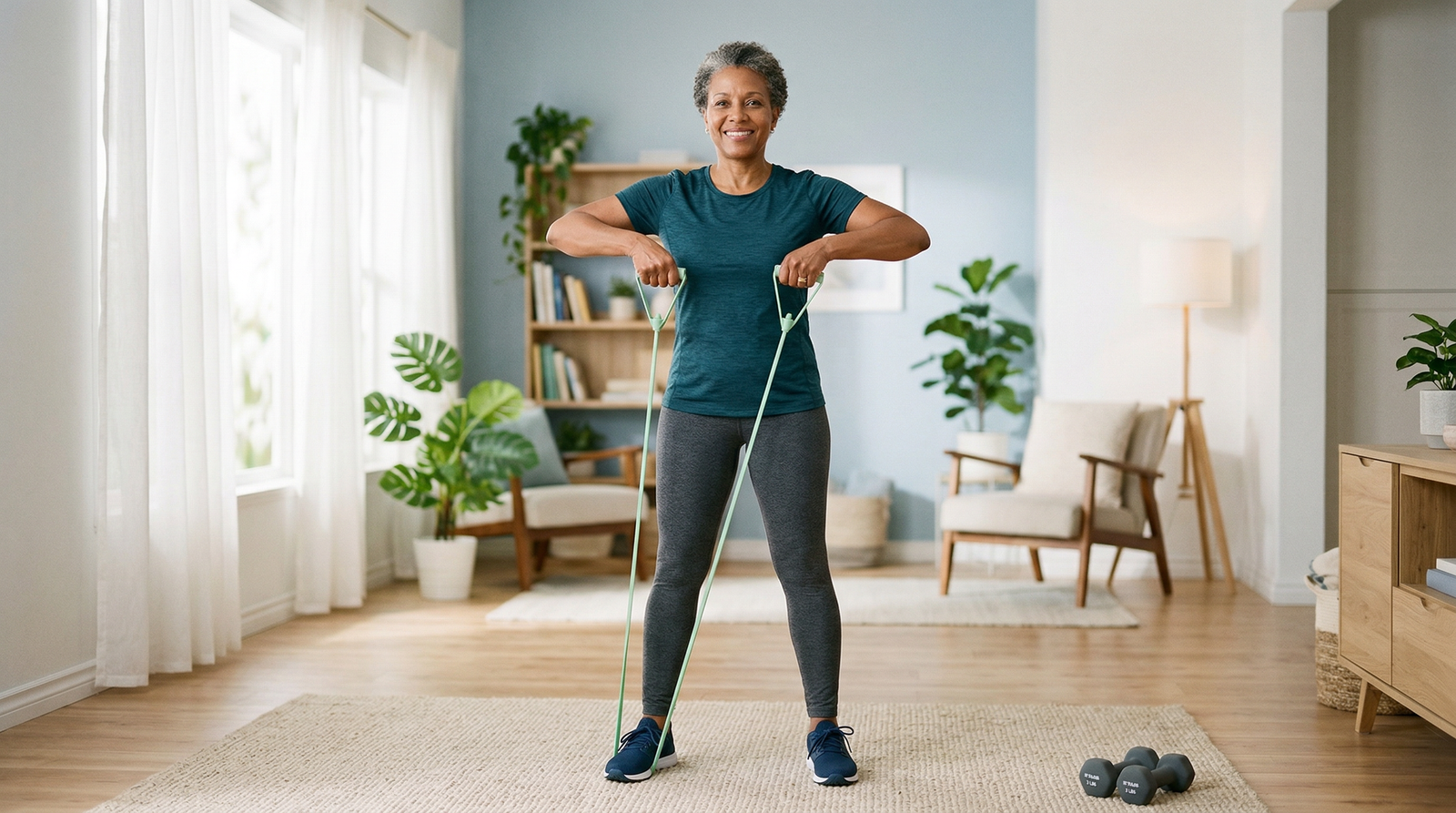
This includes exercises with dumbbells, resistance bands, weight machines, or even your own body weight. Squats, bicep curls, wall push-ups, and seated rows are all forms of resistance training.
A 2018 review published in Endocrinology and Metabolism found that resistance exercise has been highlighted as the most promising intervention to maintain or increase bone mass and density. That's a strong statement from the research community. And a 2025 meta-analysis in Nature confirmed that combining aerobic exercise with resistance training produced the best results for bone mineral density in postmenopausal women.
One advantage resistance training has over weight-bearing cardio: it can specifically target the bones most vulnerable to osteoporotic fracture. Exercises for the upper back, hips, and wrists directly load the skeletal sites where fractures are most common. Walking is wonderful, but it primarily loads your legs and hips. Resistance training lets you protect your spine and wrists too.
They're Complementary, Not Competing
The short answer to "which one is better?" is that you need both. Weight-bearing exercise provides the ground-reaction forces and overall skeletal loading that maintain bone density throughout your lower body. Resistance training adds targeted loading to specific vulnerable bones and builds the muscle strength that keeps you steady on your feet.
Muscle strength and bone health are deeply connected. Stronger muscles provide better support for your skeleton. They also improve your balance and coordination, which means fewer falls. And fewer falls mean fewer fractures. Harvard Health notes that resistance workouts that include moves emphasizing power and balance enhance strength and stability, cutting down on falls in addition to building denser bones.
Getting Started Safely
If you're new to exercise or recovering from fractures, start slowly. I started with short walks and wall push-ups. That was it. Over weeks and months, I gradually added more.
Safe weight-bearing options:
- Brisk walking (start with 10-15 minutes and build up)
- Stair climbing at your own pace
- Dancing (even in your living room)
- Low-impact aerobics
Safe resistance options:
- Wall push-ups
- Seated rows with a resistance band
- Bicep curls with light dumbbells (1-3 pounds to start)
- Chair squats (standing up from a chair without using your hands)
What to avoid: Movements that round or twist your spine under load, like sit-ups, crunches, or heavy forward bending. These put compression force on vertebrae that may already be weakened. The Mayo Clinic recommends avoiding jerky, rapid movements and choosing exercises with slow, controlled form.
Talk to your doctor or a physical therapist before starting, particularly if you've had fractures. A physical therapist experienced with osteoporosis can design a program tailored to your specific bone density and fitness level. That guidance was invaluable for me.
Your bones respond to the demands you place on them. Place no demands, and they weaken. Place the right demands, consistently, and they adapt and grow stronger. That's not wishful thinking. That's biology.