Calcium gets all the attention when it comes to bone health. And calcium matters, absolutely. But it doesn't work alone. It has teammates, and without them, much of what you're doing for your bones falls short.
After my own osteoporosis diagnosis, I started paying attention to my grocery cart in a way I never had before. I'd been a doctor for 25 years, and yet I was standing in the dairy aisle reading labels like a first-year nutrition student. What I learned changed how I shop, and I think it can change how you shop too.
The Team Behind the Calcium
You need four key nutrients working alongside calcium to build and protect bone: vitamin D, vitamin K2, magnesium, and protein. Each plays a distinct role.
Vitamin D helps your body absorb calcium from food. Without enough D, you can take all the calcium in the world and most of it will pass right through you. Vitamin K2 directs calcium into your bones and teeth and away from places you don't want it, like your arteries. Magnesium supports the structural development of bone and is needed for over 300 enzyme reactions in your body. And protein provides the framework that minerals attach to when building new bone.
The good news is that you don't need a specialty health food store to find these nutrients. They're all available at your regular grocery store. You just need to know where to look.
Produce Section
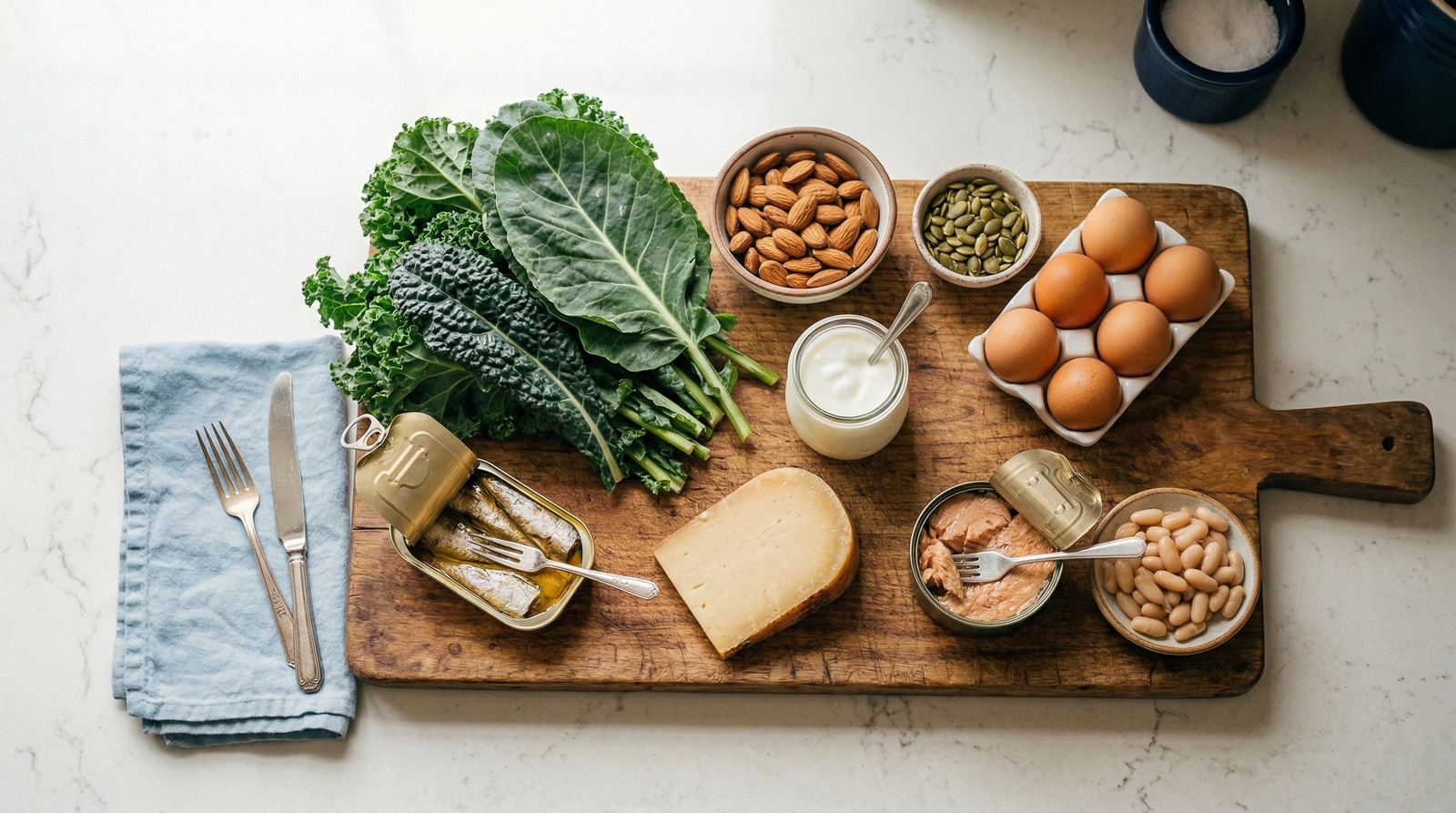
Start here. Dark leafy greens are nutritional powerhouses for bone health. Collard greens deliver about 266 mg of calcium per cooked cup, along with vitamin K. Kale provides calcium and magnesium. Bok choy, broccoli, and turnip greens round out the list. Frozen versions are just as nutritious as fresh, often cheaper, and won't go bad in the back of your fridge.
One important note: spinach contains calcium, but it also has high levels of oxalates that block calcium absorption. It's a great vegetable for other reasons, but don't count on it for your calcium intake.
Canned Fish Aisle
This is a hidden gem for bone health. A 3-ounce can of sardines with the bones provides about 325 mg of calcium, plus vitamin D and omega-3 fatty acids. Canned salmon with bones delivers around 180 mg of calcium. The key is buying the kind packed with the soft, edible bones. That's where the calcium lives.
I'll be honest: sardines took some getting used to. On toast with a little lemon and some arugula, they're genuinely good. And the combination in that one simple meal hits calcium, vitamin D, and vitamin K all at once.
Dairy Aisle
If you tolerate dairy, this aisle is straightforward. An 8-ounce glass of milk provides about 300 mg of calcium. Plain yogurt delivers around 310 mg per 6-ounce serving, plus beneficial probiotics. Greek yogurt has a bit less calcium (about 200 mg) but more protein.
Cheese counts too, particularly harder varieties. Gouda and cheddar each have around 200 mg of calcium per ounce. And aged cheeses like Gouda happen to be one of the better food sources of vitamin K2. So that cheese plate isn't entirely indulgent.
If you're lactose intolerant or prefer plant-based options, look for fortified almond, soy, or oat milk. Many provide 300 mg or more of calcium per cup. Just remember to shake the carton well. Calcium in fortified milks tends to settle to the bottom.
Nuts, Seeds, and Eggs
Almonds are a good source of both calcium and magnesium. Pumpkin seeds are rich in magnesium. Chia seeds and sesame seeds deliver a surprising amount of calcium for their size. A tablespoon of sesame seeds has about 88 mg.
Eggs, particularly the yolks, provide vitamin D and some vitamin K2, especially if they come from pasture-raised hens. Don't skip the yolk. That's where the bone nutrients are.
Protein Sources
Chicken breast is one of the better sources of vitamin K2, which surprised me when I first learned it. Beyond K2, adequate protein is essential for maintaining the collagen matrix that gives bone its flexibility. Good options include poultry, fish, beans, lentils, and tofu prepared with calcium.
White beans deserve a special mention. One cup of cooked white beans provides roughly 19% of your daily calcium needs, plus magnesium and protein. They're inexpensive and versatile.
A Few Shopping Strategies
Read the labels on fortified foods. Not all brands add the same amounts of calcium or vitamin D. A quick glance at the nutrition facts panel takes two seconds and makes a real difference.
Buy frozen produce without guilt. Frozen vegetables are flash-frozen at peak nutrition. They're often more nutrient-dense than the "fresh" produce that's been sitting on a truck for days.
Think in combinations. A meal that pairs calcium with vitamin D absorbs better than calcium alone. Sardines on toast with greens. Yogurt with almonds. A white bean and kale soup. When nutrients work together, your bones benefit more.
Don't overhaul everything at once. Pick two or three items from this list that you don't currently buy and add them to your cart this week. Small, sustainable changes add up over time, and they're far more effective than a dramatic diet overhaul that lasts two weeks.
Your bones are rebuilding themselves every day. What you put in your grocery cart is the raw material they have to work with. Make it count.