I wrote an entire chapter about bone-building nutrition in my book. It covers the science, the studies, the recommended daily intakes. That's all important. What I really needed, though, was someone to give me an idea for supper on a Tuesday night.
So that is what this post is. Five simple meals, each one packed with multiple bone-supporting nutrients, and none of them requiring more than 20 minutes of your time. I included a vegetarian option and a vegan option, because strong bones do not require any one particular way of eating.
For each meal, I have noted which key nutrients it delivers: calcium (Ca), vitamin D (D), vitamin K (K), magnesium (Mg), and protein (P).
1. Sardine Toast with Arugula and Lemon
Nutrients: Ca, D, K, P
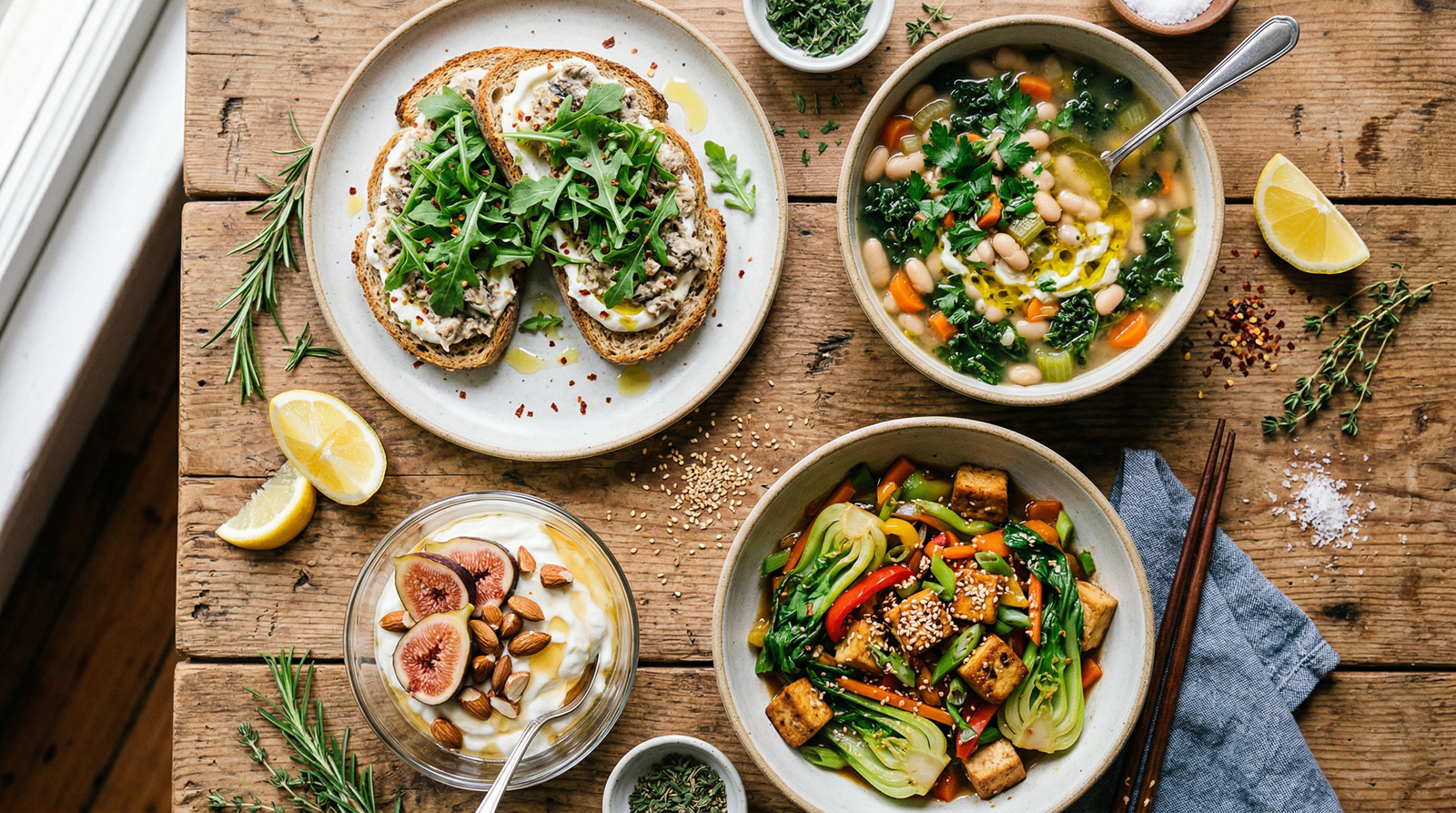
Open a can of sardines (the bone-in kind, packed in olive oil) and mash them in a bowl with a tablespoon of Greek yogurt, a squeeze of lemon juice, and a pinch of salt. Toast two slices of whole grain bread, spread the sardine mixture on top, and pile on a handful of fresh arugula.
This is my personal go-to lunch. The sardines deliver calcium (those tiny soft bones are edible and loaded with it), vitamin D, and protein. The arugula adds vitamin K. The whole thing takes about five minutes. If sardines are new to you, the lemon and yogurt mellow the flavor considerably. Give them a chance.
2. White Bean and Kale Soup
Nutrients: Ca, K, Mg, P (Vegetarian)
Warm a tablespoon of olive oil in a pot, add two minced garlic cloves and a diced onion, and cook for two minutes. Add a bunch of chopped kale and stir until it wilts. Pour in a can of drained white beans (cannellini or great northern) and two cups of vegetable broth. Season with salt, pepper, and a squeeze of lemon. Simmer for 10 minutes. Top with grated Parmesan if you like.
White beans are one of the best plant sources of calcium (one cup of cannellini delivers about 160 mg). Kale brings vitamin K and additional calcium. The beans and broth provide magnesium and protein. This makes excellent leftovers, and I often double the batch on Sundays.
3. Sesame-Ginger Tofu Stir-Fry with Bok Choy
Nutrients: Ca, K, Mg, P (Vegan)
Press a block of firm tofu, cut it into cubes, and toss it in a hot skillet with a tablespoon of sesame oil. Cook until golden on a couple of sides, about five minutes. Add two cups of chopped bok choy, a tablespoon of soy sauce, a teaspoon of grated fresh ginger, and a teaspoon of rice vinegar. Cook another three minutes until the bok choy is tender-crisp. Sprinkle generously with sesame seeds and serve over rice or on its own.
This one surprised me with how nutrient-dense it is. Tofu made with calcium sulfate (check the label) contains more calcium per serving than a glass of milk. Bok choy adds calcium and vitamin K with excellent bioavailability, meaning your body absorbs it readily. Sesame seeds contribute additional calcium and magnesium. The tofu delivers protein. And it genuinely tastes good, which matters.
4. Salmon and Sweet Potato Sheet Pan
Nutrients: Ca, D, Mg, P
Preheat your oven to 425 degrees. Cut a large sweet potato into half-inch cubes, toss with olive oil, salt, and pepper, and spread on a sheet pan. Roast for 10 minutes, then place a salmon fillet on the pan alongside the sweet potato. Return to the oven for another 10 minutes until the salmon flakes easily.
Salmon is one of the best food sources of vitamin D and also provides protein and some calcium (particularly canned salmon with bones, but fresh works too). Sweet potatoes bring magnesium and potassium, which also supports bone health. This is the kind of meal that looks like you put in effort but barely required any.
5. Greek Yogurt Parfait with Almonds and Figs
Nutrients: Ca, Mg, P
Layer a cup of plain Greek yogurt with a handful of sliced almonds, two or three chopped dried figs, and a drizzle of honey. That is it.
Greek yogurt is a calcium powerhouse (about 200 mg per cup) and delivers substantial protein. Almonds add magnesium and more calcium. Dried figs are a surprisingly rich calcium source that most people overlook, with about 60 mg in just three or four figs. I eat this for breakfast at least three mornings a week, and it takes less time than making oatmeal.
The Bigger Point
No single meal is going to transform your bone density. But meals like these, eaten consistently over months and years, contribute meaningfully to the nutrient foundation your bones need. The goal is not perfection. It is building a pattern of eating that supports your skeleton without making you feel like you are on a medical diet.
If you are looking for the deeper science behind each of these nutrients and why they work together, Chapter 4 of my book covers that in detail. But for tonight, just pick one of these five and make it. Your bones will thank you.