If you have been prescribed a bisphosphonate like alendronate (Fosamax), risedronate (Actonel), or ibandronate (Boniva), you probably got a long list of instructions. Take it first thing in the morning. On an empty stomach. With a full glass of water. Stay upright for 30 minutes. Do not eat or drink anything else. Do not take your other medications. Do not go back to bed.
It can feel like a chemistry exam before breakfast. And the truth is, a lot of people quietly stop taking these medications because the routine is inconvenient or uncomfortable. Research published in Osteoporosis International found that poor compliance with oral bisphosphonates is a widespread problem, and it is usually not because people forget. Most people are actively choosing not to take them, often because the experience is unpleasant or the instructions feel burdensome.
So after talking with patients for years and hearing what works, I have put together my best practical tips for making bisphosphonate therapy livable.
Get the Water Right
This is the single most important thing. Drink a full 8-ounce glass of plain water with your tablet. Not a sip. Not a few gulps. A full glass. The FDA's prescribing information for Fosamax specifies 6 to 8 ounces of plain water.
The reason matters: the water helps the tablet travel quickly through your esophagus and into your stomach, reducing the chance of irritation. According to the Hospital for Special Surgery, most patients who report gastrointestinal side effects turn out to be not following the dosing instructions properly. When taken correctly, the incidence of serious esophageal irritation is very low.
Water only. Not coffee, not juice, not sparkling water. Those can interfere with absorption. Your morning coffee can wait 30 minutes.
Build It Into a Routine You Already Have
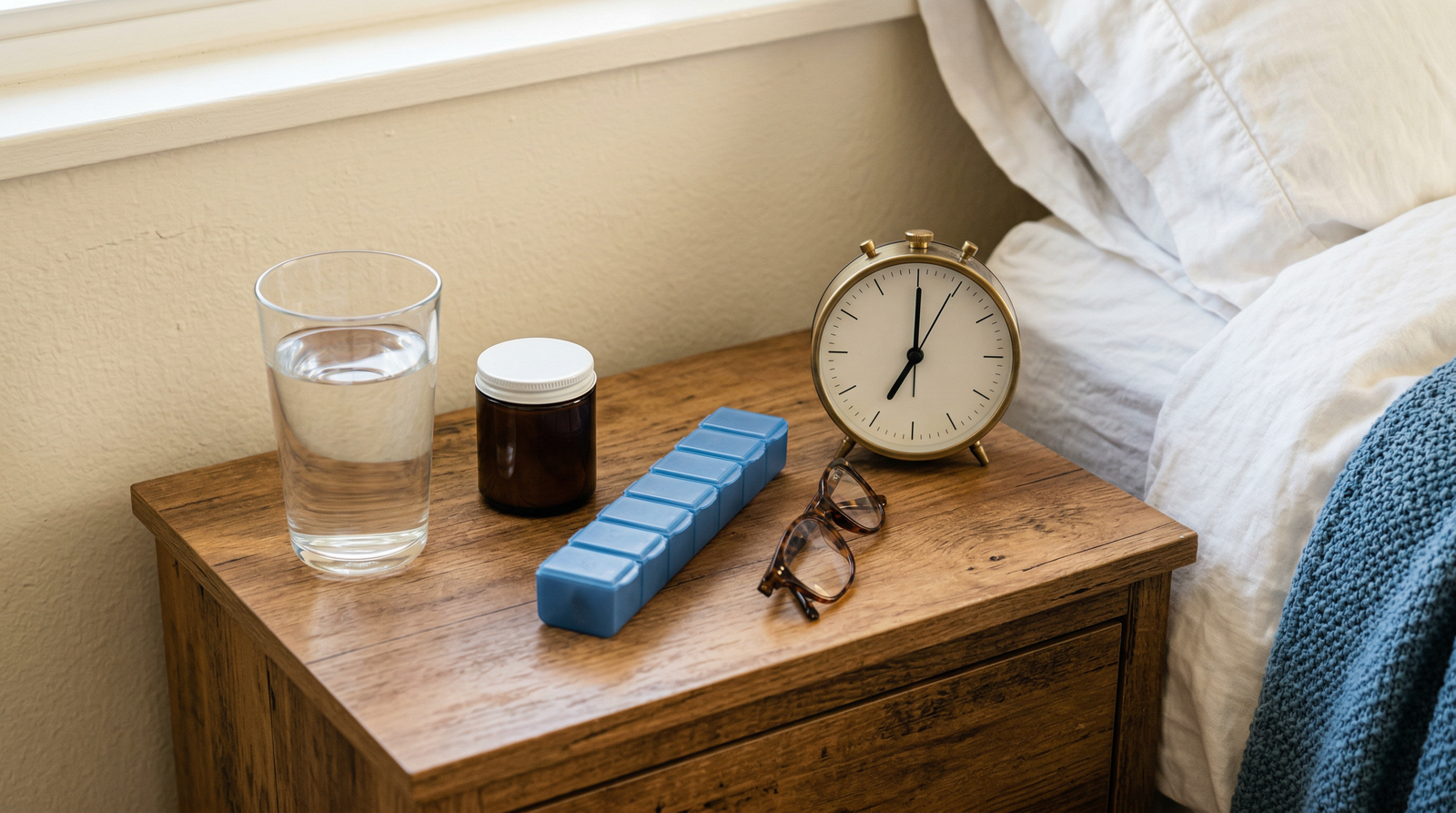
The 30-minute upright waiting period is where most people struggle. My suggestion: use that time. Set your medication and a glass of water on your nightstand. When your alarm goes off, take it before your feet hit the floor (while sitting up), then start your morning routine.
Shower. Get dressed. Make the bed. Walk the dog. Read the news. Or try meditating. That 30-minute upright window is actually a perfect opportunity for a morning meditation practice. You are already sitting quietly with nothing else to do. Even five or ten minutes of focused breathing can lower cortisol levels, which is good for your bones and your mood. By the time you are done, 30 minutes have passed, and you can eat breakfast and take your other medications. The waiting period stops feeling like dead time once you assign it a purpose.
If you take the weekly version, pick a day that works for you. Many of my patients choose Monday morning because it is easy to remember as the start of the week. Others prefer a weekend day when the morning routine is more relaxed.
Do Not Lie Down
This one sounds simple, but it trips people up, especially early risers who take the pill and then want to rest for a few more minutes. Lying down allows the tablet to sit in your esophagus, which is how irritation happens. Sit upright, stand, or walk around. The Cleveland Clinic recommends staying fully upright for at least 30 minutes and waiting to eat or drink anything else during that time.
If you find yourself tempted to lie back down, that is a sign to move the medication to a time when you are truly getting up for the day.
Separate It From Everything Else
Bisphosphonates have notoriously poor absorption, about 1% of the dose under ideal conditions. Anything in your stomach competes with that. Pharmacists at GoodRx recommend waiting at least 30 minutes before taking calcium supplements, magnesium, iron, multivitamins, or antacids, as all of these can significantly reduce how much medication your body actually absorbs.
The same goes for food. Even a small bite of toast can cut absorption dramatically. I know it is tempting to grab something while you wait, but the medication genuinely cannot do its job if there is food in your stomach.
Know When to Speak Up
Mild heartburn or stomach discomfort in the first few weeks is common and often resolves. But if you develop difficulty swallowing, pain when swallowing, or chest pain, stop the medication and call your doctor. These could be signs of esophageal irritation that needs evaluation.
And if the oral medication simply does not work for your body or your life, tell your doctor. There are alternatives. Intravenous zoledronic acid (Reclast) is given just once a year and avoids the GI tract entirely. The Hospital for Special Surgery notes that IV bisphosphonates are a good option for patients who cannot tolerate oral formulations.
Beyond IV bisphosphonates, there are also entirely different classes of osteoporosis medications, including denosumab (Prolia), which is a twice-yearly injection, and anabolic agents like teriparatide (Forteo) and romosozumab (Evenity), which actually build new bone rather than just slowing breakdown. Your doctor can help you weigh the options based on your specific situation.
You should not suffer in silence with a medication that is making you miserable. There are other paths to the same goal.
Think of It as a Long Game
Bisphosphonates work slowly. You will not feel different after a week or a month. The medication is quietly reducing bone breakdown at the cellular level, and the benefits accumulate over years. Studies show that non-compliance increases fracture risk by 8% after just 2 years and by 23% after 14 years.
Your doctor will likely recommend a bone density scan after a year or two to check progress. That feedback can be motivating. In the meantime, the consistency matters more than anything else.
The Bottom Line
Bisphosphonates are not the most user-friendly medications. I get it. But with a few adjustments to your morning routine, they become manageable. And the fracture protection they provide is real and meaningful.
If you are struggling with your medication, do not just quietly stop. Talk to your doctor. Adjust the routine. Try a different day. Explore alternatives. The best osteoporosis medication is the one you actually take.